
2026 Legislative Session Snapshot
By Jade Fisher, Communications Specialist
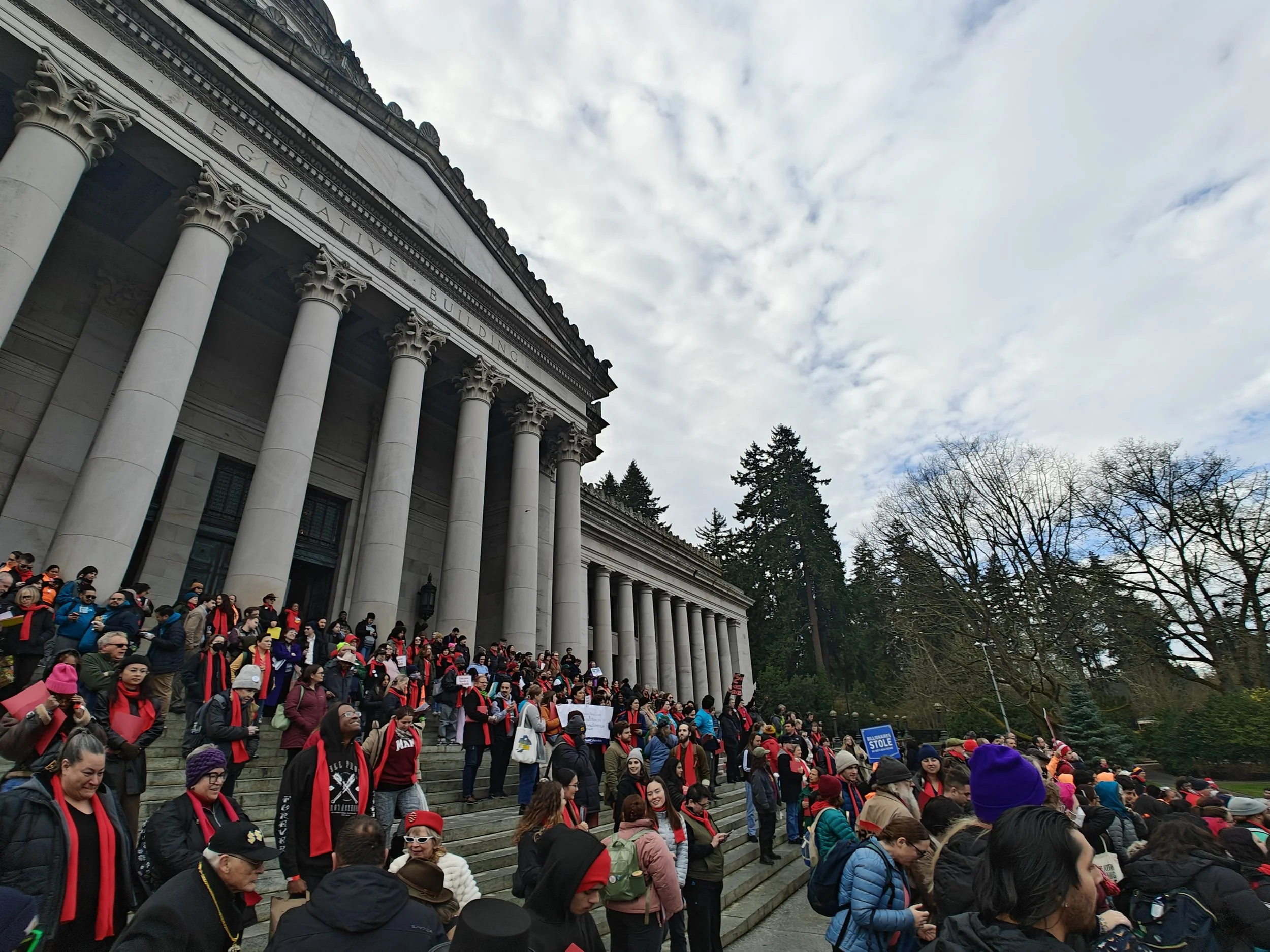
600+ housing advocates gather on the steps of the Legislative Building in January 2026
Washington legislators wrapped up the short legislative session earlier this month on March 12th. We wanted to pop in with a quick update about the 60-day sprint.
Earlier this year, Ballard Food Bank staff and volunteers advocated in Olympia for proposed policies that would improve material conditions for our neighbors. These proposed policies argued for more affordable housing and housing protections, more grocery stores, access to high quality local produce, and connecting our hunger relief organizations with state agencies and stakeholders to create a statewide plan for food security. You can find more information about which bills we advocated for on this blog post.
Here's a snapshot of what passed this session and what bills unfortunately didn't.
Anti-Poverty Bills that Passed:
SB 5963: Basic Needs Supports for College Students
6 million college students in the U.S. are food insecure and signing up for SNAP benefits has historically been burdensome. Financial aid for students is a lifeline for young adults pursuing further education. SB 5963 automatically qualifies students who are in the Passport to Careers program (which helps youth in various types of foster care or who have experienced unaccompanied homelessness prepare for college and careers) for the Washington College Grant. A grant that can go toward tuition, school supplies, and living expenses. This bill streamlines the process for eligible students so they don't miss out on essential aid.
The bill, sponsored by Senator T'wina Nobles, was signed into law with bipartisan support!
HB 2238: Create a Statewide Plan for Food Security
Though this bill doesn't require a budget, it calls on the legislature to develop a strategy for food security in order to "end hunger, reduce diet-related health disparities, and increase agricultural viability and supply chain resilience." In other words, it helps connect community members, hunger relief organizations, local governments and more to work on a coordinated effort to protect our food systems and increase equity and efficiency in addressing hunger.
Unfortunately the following bills did not make it into law during the 2026 Legislative Session:
HB 2266 and HB 2489:
HB 2266 encourages permanent supportive housing, transitional housing, indoor emergency housing, and indoor emergency shelters. HB 2489 would take us back to a pre Grants Pass decision status quo (which refers to the US Supreme Court decision that allows cities to enforce 'anti-camping' ordinances which often targets unhoused people for sleeping in public spaces.
Unfortunately these bills did not make it out of the House committee. But we are hopeful for a future with more affordable housing options and committed to decriminalizing homelessness. We will surely support future bills that aim to make these a reality.
HB 2100: Create the Well Washington Fund
This bill, prime sponsored by Representative Shaun Scott, would create the Well Washington Fund with a statewide excise tax on large employers on payroll amounts over Medicare minimum. The bill was based off Seattle's JumpStart payroll tax. The fund would have paid for basic needs supports for low-income people such as stabilizing healthcare (especially Medicaid), education, and human service programs. This was intended to protect families and individuals from austerity budgeting at the federal level.
HB 2463 and HB 2369
HB 2463 is a Farm to Food Banks plan where local food can be used to feed neighbors facing hunger. Washington farmers grow food that can support food banks like ours! As these programs see increases in demand, this bill would have connected local producers with local food banks. As a result, our local food systems would be strengthened.
HB 2369 is about a local food to schools pipeline. Similarly to HB 2463, it would support our local food producers while feeding folks in our communities - in this case, this local produce would go to kiddos across the state. The model suggested in the bill would create a simple, efficient, and equitable process for public schools to access local food for school meals.
Though these bills did not make it to Governor Ferguson's desk, we will continue to fight for anti-poverty measures in Legislative Sessions to come.
The bills that become law affect the very conditions our neighbors will be living in, applying for housing in, seeking childcare in, searching for healthcare amidst and more. At Ballard Food Bank, food is only one component of our work. We know it's also our responsibility to take a step back, see the bigger picture, and to address the larger systems that lead to economic injustice and poverty.
Be sure to follow our blog and social media (Instagram/Facebook/LinkedIn) to keep updated on our future Legislative Agendas. And we hope to see you at our next Advocacy Day!