
Washington State Legislators Visit Our Hub for Hope
By Jade Fisher, Communications Specialist
The Washington State legislative session for 2026 is currently underway. As an even year, the legislative session will be a 60-day short session with an expected end date of March 12th. Lawmakers will be introducing, debating, and amending new laws as well as balancing the budget. (Find out how a bill becomes law here.)
At Ballard Food Bank, food is only one component of our work. We also jump in at critical moments in our neighbors' lives to help keep them housed, address their physical and mental health needs, and connect them to partner providers and emergency financial assistance. And beyond working directly with our neighbors, we take a step back to address the larger systems that lead to economic injustice and poverty.
We engage with our local, county, and state officials to help promote our anti-poverty agenda. Our work with the Anti-Hunger and Nutrition Coalition brings the voices of hungry Washingtonians to our lawmakers in support of public policies to end hunger and fight poverty in our communities.
As part of our engagement strategy with lawmakers, we were honored to have state legislators join us for a dynamic tour of our space last October to hear what's happening with constituents so they can better inform their policies during the legislative session.
Last fall, we saw the sweeping effects of the federal government shutdown in real time. Benefits - like WIC and SNAP - were at risk of running out for millions of Americans in the following weeks. Amidst this rising panic, state legislators visited our Hub for Hope to hear what happens when distressing federal policies trickle down to everyday people.
More and more neighbors were shopping in our market and utilizing critical services. During the October 2025 visit, we shared real neighbors’ stories with our Washington State Representatives. It’s our hope that they will take these stories into account during the current legislative session to advocate for food, health, and other basic needs like affordable housing.
Our 36th district legislators Representative Berry - a longtime Ballard Food Bank front desk volunteer - Representative Reed, and Senator Frame joined us in conversation to learn more about the gaps we’re seeing in our social safety net. Representative Macri from the 43rd Legislative District and Representative Gregerson from the 33rd Legislative District traveled from their respective districts to learn more about the rising number of folks seeking food, health, and housing services across the state.
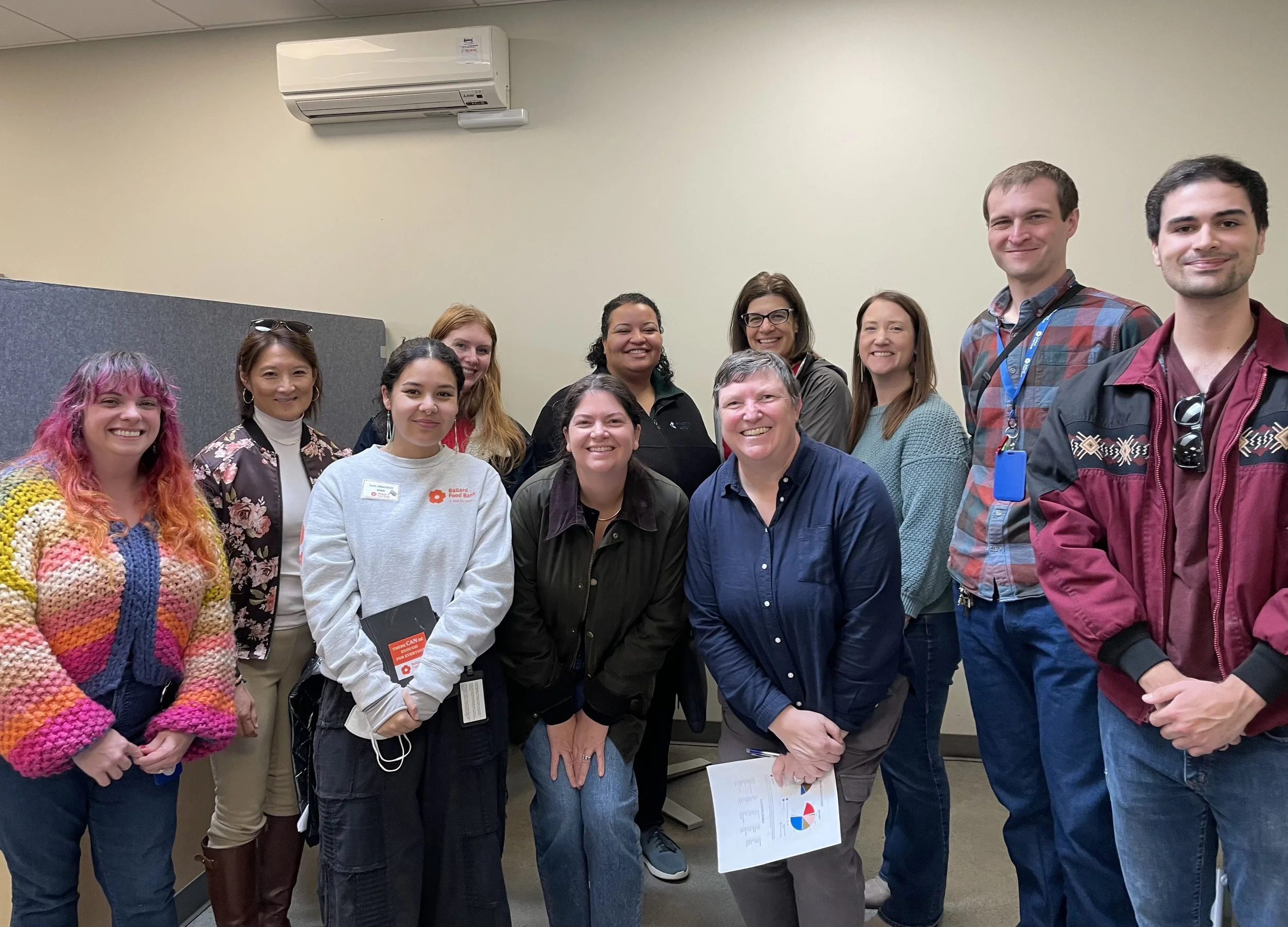
Lawmakers hear from Client Advocate Katrina and Senior Manager of Community Advocacy and Outreach Nathaniel
Hub staff members Katrina and Nathaniel shared how emergency financial assistance works as a stopgap for folks experiencing unexpected income stoppage. Helping a neighbor pay their utility bills or rent keeps them in their current housing and has healthier and safer outcomes in the long run.
Katrina shared the story of a neighbor who was losing subsidized public housing due to federal cuts. The organization responsible for administering the longterm low-income rentals had no transition plan for renters being phased out of housing. All of this was happening against a backdrop of surging evictions in Washington State and an overwhelmed Right to Counsel program.
Hub staff members shared how important it is for the state to invest in the Right to Counsel program to keep folks in their existing housing. And to work on real transition plans for folks losing subsidized housing so they don’t end up in an even more expensive, emotionally taxing cycle to obtain stable housing.
Anti-poverty measures and advocating for affordable housing ARE anti-hunger actions. When people don’t have to decide between rent and food, we are all healthier, safer, and better off. We continue to urge our representatives to ensure food, health, and basic needs like housing remain funded in the state.
Ballard Food Bank staff member Lily also shared numbers on the Weekend Food For Kids program and Home Delivery.
Around 450 households receive home deliveries and our Weekend Food For Kids program is expecting to grow to 700 students this year. Last year, the program served 631 students.
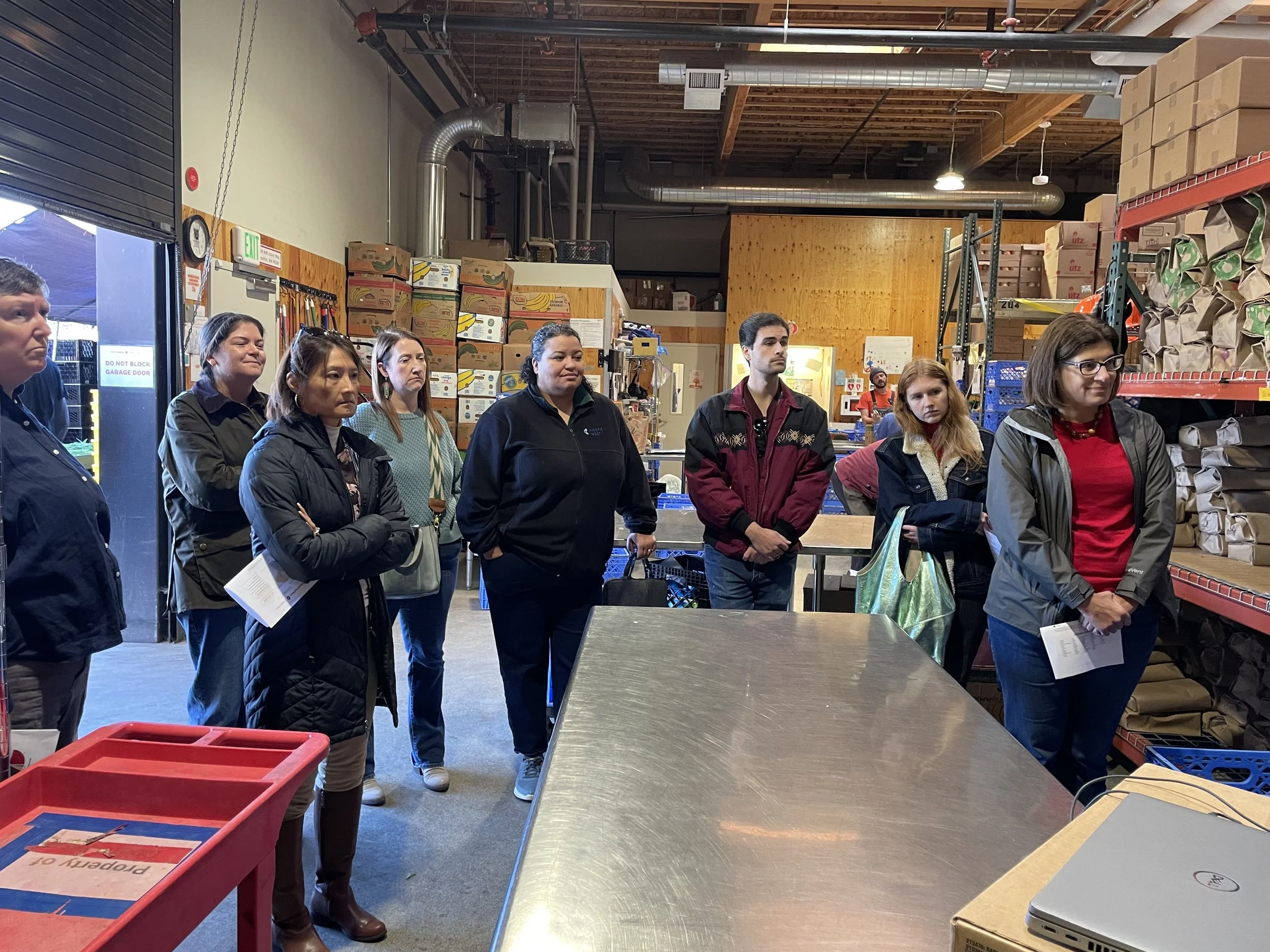
Representatives join Lily at the Weekend Food For Kids and Home Delivery packing station
Representatives asked questions on the ages of our visitors, the languages spoken in our dynamic space, and the distances people travel to our one-stop-shop for resources and food.
We hope that these conversations and stories encourage legislators statewide to fight for and protect funding for crucial services like housing and food access programs that help sustain our neighbors who fall through the cracks of the social safety net.