Building a Community of Inclusion
By Gypsy Walukones, Senior Communications Manager
"Recognize that disability is the one community anyone can become part of at any time. Listen to disabled voices. Educate yourself on disability history and the work of advocates. Follow and support disabled creators. Most importantly, be intentional about including disabled people in your everyday life."
July is Disability Pride Month, commemorating the July 1990 passage of the Americans with Disabilities Act (ADA). (If you’re not familiar with the Capitol Crawl demonstration earlier that year, I’d strongly suggest you get to know more!)
Ballard Food Bank strives to create a welcoming, intentionally inclusive environment for all. We also acknowledge that many groups of people in our society, including adults and children with disabilities, are disproportionately impacted by hunger, poverty, and systems of oppression. This means we have to consider both visible and invisible disabilities and how to make our programs, space, and communications more accessible.
One obvious result of this effort is our home delivery program, meeting neighbors where they are, right in their own homes.
One home delivery client we spoke with last year shared “While I’m not homebound, I do have several medical conditions that make the trip there on the bus every week difficult. That would be a big errand for me. I have limits on my ability and stamina to do an errand like that…I might get there 20% of the time if I had to go myself.”
Currently, our home delivery program is full and has a long waitlist. Our food access team is working hard to bring more people into the program and off the waitlist, while the organization as a whole works to get additional warehouse and packing space for the program. In the meantime, the team is constantly finding creative solutions to get our neighbors the food they need, whether that means having someone else come in to shop or pick up a quick order, or connecting them with other programs and resources.
Guests, volunteers, and staff within the food bank all benefit when we make the space more accessible to disabled neighbors. Have you heard of the Curb Cut Effect? This term highlights how things like curb cuts, audiobooks, and closed captioning that were originally designed to help people with specific disabilities end up being useful to a much wider audience. Curb cuts, as an example, are used by people pushing strollers or pulling rolling luggage or carts as well as wheelchair and walker users.
One way this plays out at Ballard Food Bank is through our reservation system. One of the reasons we introduced this was for shoppers who are physically unable to wait in line for hours, but it benefits so many others. Families with small children and childcare constraints. People who are working one or more jobs and have limited windows of time to come into the food bank. Shoppers with invisible disabilities and/or neurodivergence, and anyone who may struggle in a busy, crowded, often loud space. Our fast order sheet provides another option to avoid waiting in line and navigating the space.
Likewise, prioritizing a variety of nutritious foods, from farm fresh produce to ready-to-eat dishes, in our Community Market helps folks with disabilities and medical conditions and also benefits the rest of us.
As volunteer writer Kara Witsoe shared in a prior blog post, The Kindness Café team offers options outside of the dish of the day to accommodate medical and physical needs as well as dietary restrictions and preferences - from gluten free to nondairy to vegetarian to soft foods that don’t require much chewing.
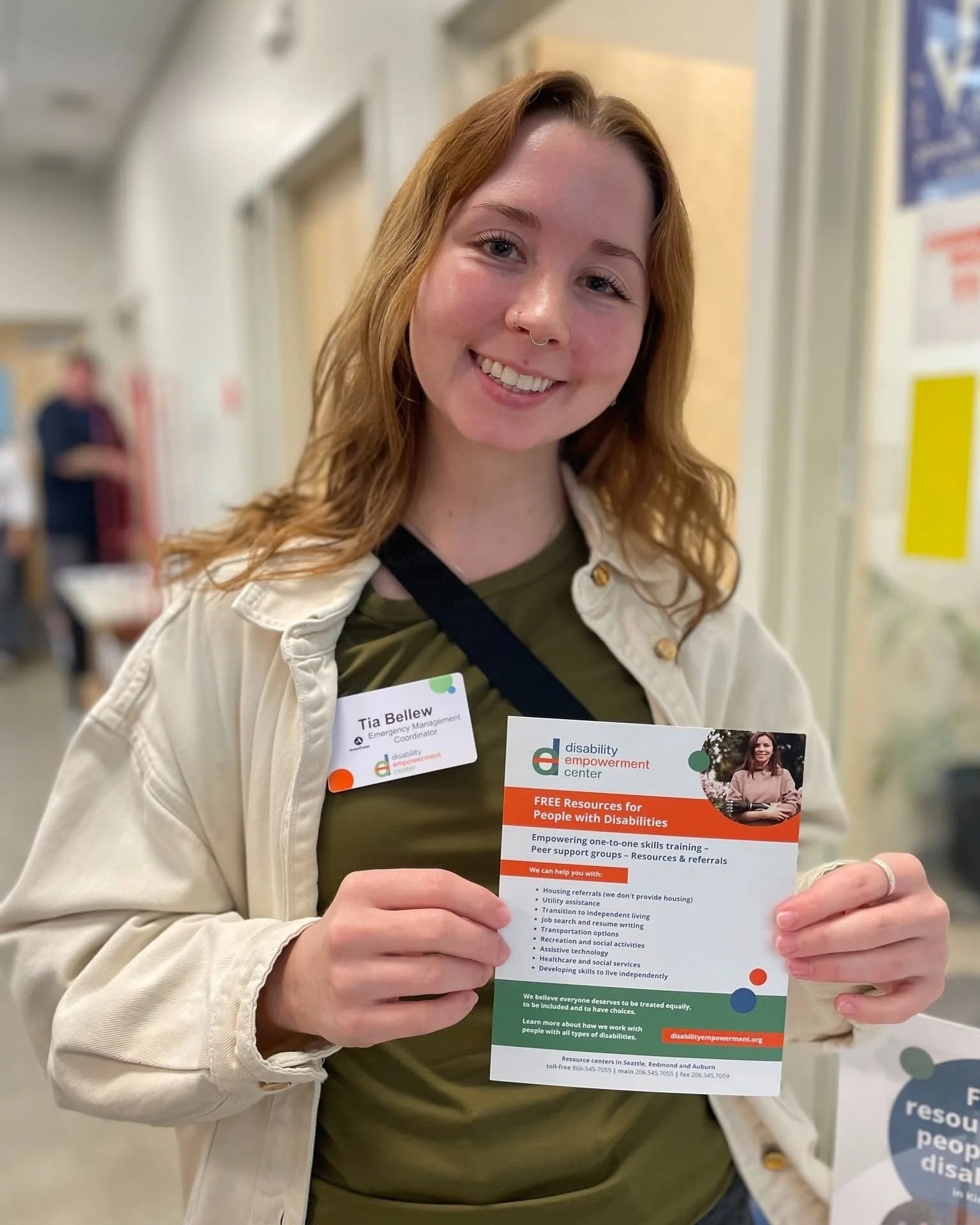
Tia from Disability Empowerment Center connects with clients in our Community Resource Hub
In our Community Resource Hub, client advocates and other staff work to connect disabled individuals with resources and have been known to get scrappy and help repair wheelchairs and other mobility devices. Hub partner Disability Empowerment Center offers peer support, housing referrals, job searching assistance, technology, and skills to help individuals live independently to the level they want. They also host a great Understanding Ableism webinar series that you can find on their YouTube channel.
Ballard Food Bank Volunteer Operations Manager Bri Ross emphasizes how much volunteers with a wide range of disabilities contribute to our organization and society. “Everyone should have the opportunity to give back and get involved in ways that work for them.” Bri says, “Give people the tools they need to show up as their best selves.”
For Bri, that means working to make volunteer descriptions clearer and highlight what accommodations are available for different roles, so folks know what to expect before they arrive. Can this role be done sitting down? Is this something where the volunteer can wear headphones and have some space around them? “Ideally, people don’t need to disclose their accommodation needs if everything is clear ahead of time.”
Strongly associated with the Disability Justice movement, the slogan “nothing about us without us” emphasizes the importance of people with disabilities being actively involved in decision making about policies and programs that impact their lives. In an ableist society and a political climate that’s increasingly hostile to our disabled community members, we know it’s crucial to work with impacted staff, volunteers, and guests to continue to improve accessibility for all our neighbors.