Where Does Our Food Come From?
One of the top questions we get from food bank shoppers, donors, and community members alike is where we get the food for our free Community Market, Kindness Café, and food access programs.
Last week, several of our program leaders joined Executive Director Jen Muzia for a virtual gathering to dig into this question. The conversation was moderated by Donor Relations Manager Ciara Kuldinow.
Jen started off the conversation by highlighting the backdrop of growing need and how we’ve had to stay scrappy and expand our food purchasing and acquisitions from various sources over the past several years. “This is by far the most food we've ever had to source. We're seeing more people and families due to a perfect storm of rolling back federal food benefits, rising costs of essentials, unstable supply chains, and policies targeting our most marginalized neighbors.”
Jen reminded us that neighbors come from all over Seattle and King County, knowing they’ll be treated with respect and care and get the food they need to feed their families.
Food Purchasing
Approximately 60% of the food coming into the food bank and going home with our neighbors is food we purchase. When we buy food, we’re able to prioritize staples, making sure there’s enough to last through the week so that families shopping on Thursday afternoon have as many options as those shopping on Monday morning. We’re also able to buy culturally relevant foods for the diverse range of guests and incorporate feedback from the individuals we serve.
Senior Manager of the Community Market, Sarah Huttula, explained that our dollars can also stretch further in some cases as we can get bulk discounts from some distributors. But we do often pay full price. We also strive to balance maximizing what we can with our budget with supporting local producers and food systems.
One exciting program that helps us purchase from local farms is farm grants through Growing for Good, which allows us to purchase from five local producers this summer - Canales, Left Foot, Hayton, Olsen, and Regino.
In addition to the farm grants, we’ve recently started partnering with Hy-Gras Farms, a fourth-generation dairy farm in Auburn/Enumclaw area, for fresh, cream-top milk.
Some of our bulk buy purchases are done in partnership with other food banks and Food Lifeline through the Seattle Food Committee. Members meet regularly to compare notes and also participate in surveys to help prioritize what to buy. After a recent survey on produce options with each food bank picking first and second choices of what they’d like to see, the bulk buy included bok choy and carrots.
To round out our weekly ordering, we source dry good staples, meat, dairy, bread, fresh and produce from distributors including Weigelt, Costco, Charlies, Caruso, Cascadia, United Salad, and Franz Bread. We’re constantly evaluating existing and new suppliers to get the best value and choices.
Food Recovery and In-Kind Donations
Senior Manager of Food Donations, Lena Hart-Bundy, outlined the two main ways our community helps us stock our shelves with in-kind donations. The first is through donations from neighboring grocery stores and other local businesses through our food recovery program. Food bank volunteer drivers and staff collect food donations from 21 neighboring businesses 7 days a week. This includes our local grocery stores, pet stores, and bakeries like Top Pot and Mighty-O.
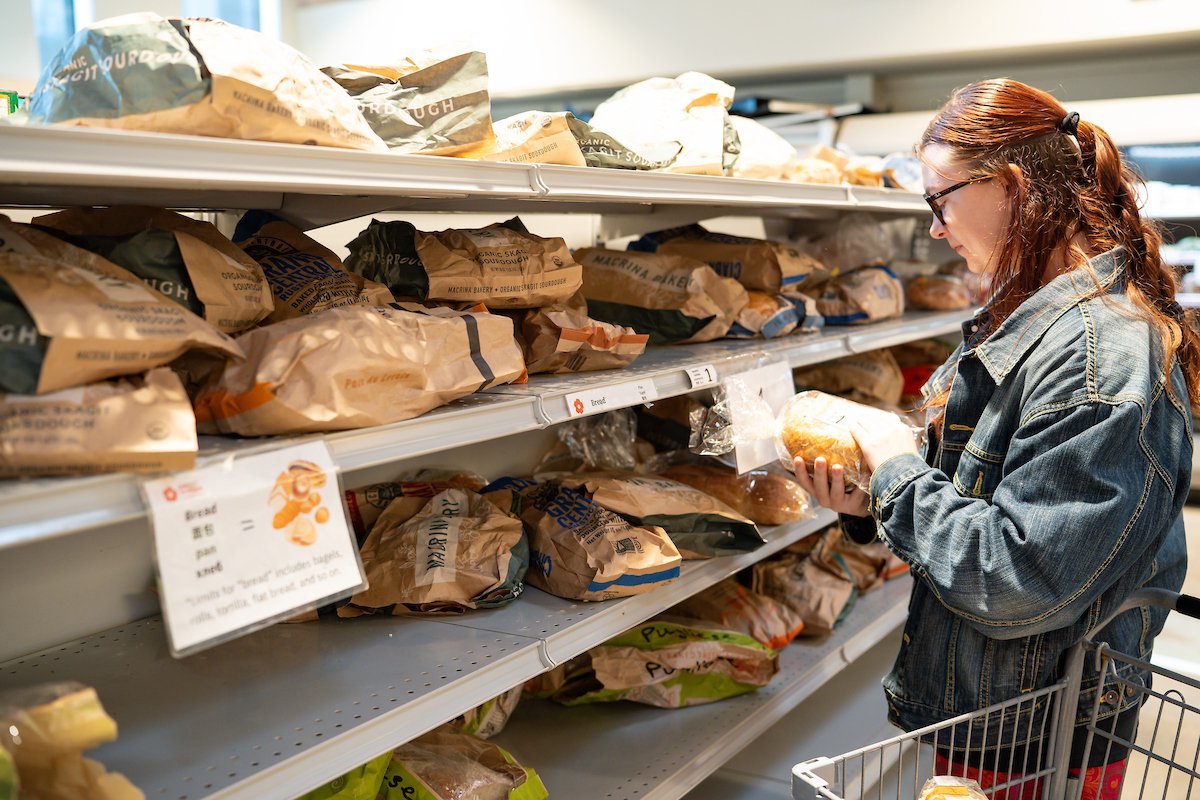
Food recovery along with donations from Community Loaves help keep our shelves stocked with fresh bread.
Photo by Alabastro Photography
These donations are mostly short-dated items, imperfect or very ripe produce, or other excess items, and include ready-to-eat deli items, produce, meat, baked goods, refrigerated/frozen foods, bread, and more. We’ve recovered around 846,435 pounds of food so far this year, with an estimated monetary value of: $1,904,479. Not only are we adding a wide variety of food to our market shelves through these pick-ups, but we’re also reducing food waste and keeping these items out of the landfill.
The second avenue for in-kind community giving is through direct donations and food drives from individuals and various groups! We’re so grateful to have so many people and groups thinking of us throughout the year and collecting food and hygiene items, from schools, churches, apartment buildings, and various businesses.
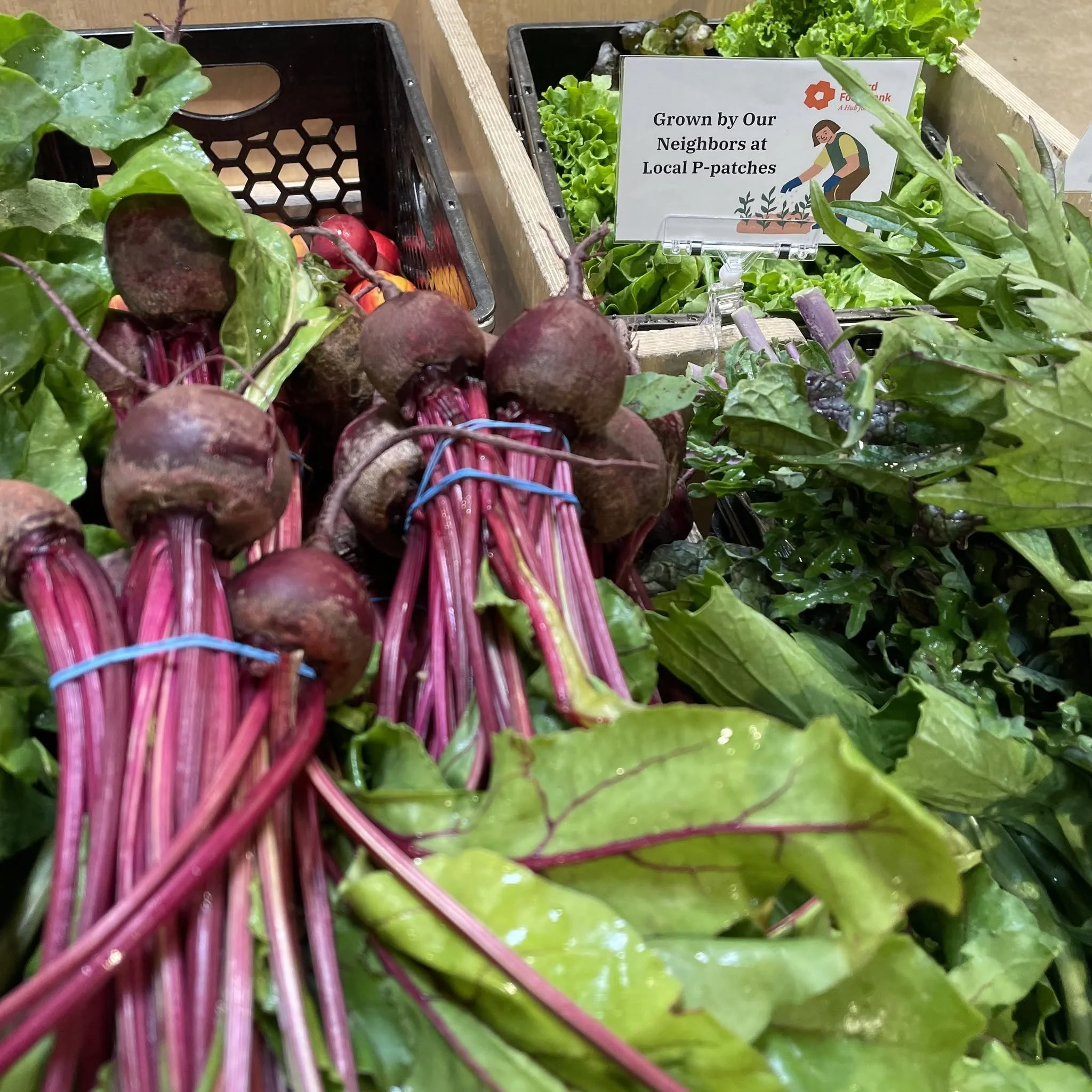
Shoppers in our free community market appreciate the fresh veggies donated by local P-Patch gardeners.
Lena says, “I've been so inspired by the creative ways people bring their community together to support the food bank, including collecting donations at block parties, as admission for yoga classes, kids’ lemonade stands, and concerts. Ballard FC and Salmon Bay FC collect donations at all of their matches! The holidays are our busiest time for donations – so we love it when folks include a drive with their events throughout other times the year.”
Along with shelf-stable goods, we love getting donations of fresh produce from home gardens and P-Patches!
A huge benefit to in-kind donations like this is that it adds more variety and options for our shoppers, items that we have difficulty procuring through other channels, or higher-cost items like baking supplies, spices, condiments, and hygiene items. If you’d like to help us, there are a ton of ways to give – we have a most-needed items list on our website, plus a food drive toolkit.
Growing Our Own Food
Senior Manager of Food Access Ysabel Diaz runs our harvesting program. This is the third year Ysa has partnered with Jim Eichner of Food Bank Farm in Snohomish, and the program has grown significantly! Our first year yielded almost 28,803 pounds of fresh produce, our second year totaled 60,518 pounds. So far this year, we have harvested 10,122 lbs of produce just since the season started in July, and we’ll be harvesting more through November.
More produce from harvest program means less food we have to purchase. Last season, the amount of produce we harvested equated to $65,700 worth, helping stretch our food budget further. It can also be helpful to also think in terms of average amount we would purchase in a week. For example, last week’s cucumber harvest was over double the Market’s standard weekly order, so we’ve had plenty of cucumbers for shoppers as well as delicious cucumber salads in the Kindness Cafe!
Each year we are learning and building on the last, doing our best to make our growing as efficient as is possible in the uncertain world of farming. Ysa says that “this year, we’ve been doubling down on our “hoop house” work to increase production and it has already proven to be beneficial.” A dedicated volunteer “Tunnel Team” comes out each Monday to support plant growth along with constructing the beds in April/May. This has been a great way to learn about farming, get a workout, and grow job transferrable skills.
In the world of cyclospora and salmonella and other diseases coming up in our large scale agriculture (due to rolling back of regulations), it’s comforting to know exactly where our produce comes from. You can see the quality in the store. Some harvest volunteers also volunteer in the market later in the week and can say to clients that they harvested the bell pepper that they’re taking home today! We’re proud to be involved in this true local food system and help build community resilience.
As we ramp up into the busiest months of the harvest season, we can use more volunteers to help us bring back more produce from the farm. Sign up for harvesting shifts through Galaxy Digital or reach out to ysad@ballardfoodbank.org.
Grounding Decisions in Our Values
Rounding out the conversation, Ciara noted how each speaker had naturally woven Ballard Food Bank’s values into their comments because we all center them in our work. She took a moment to read through each out loud - from stewarding the land to including perspectives, input, and guidance from the people we serve, and prioritizing nutritious, culturally appropriate foods.
Another common question we get is if it’s better to give money or food. As team members shared, there are advantages to both. As the need continues to grow, it takes all of us giving in every way we can to ensure there can be enough for everyone.